Toned Ear
Loading game...
What is Toned Ear?
Toned Ear is an online ear training site built around short, focused listening exercises. Instead of presenting music theory as abstract labels, it asks you to hear something first, then identify what your ear just picked up.
The core appeal is speed: choose a drill, listen, answer, repeat. It works well for musicians, producers, singers, students, and curious listeners who want to sharpen pitch recognition, harmonic awareness, and functional hearing in practical bite-sized sessions.
What Can You Find on Toned Ear?
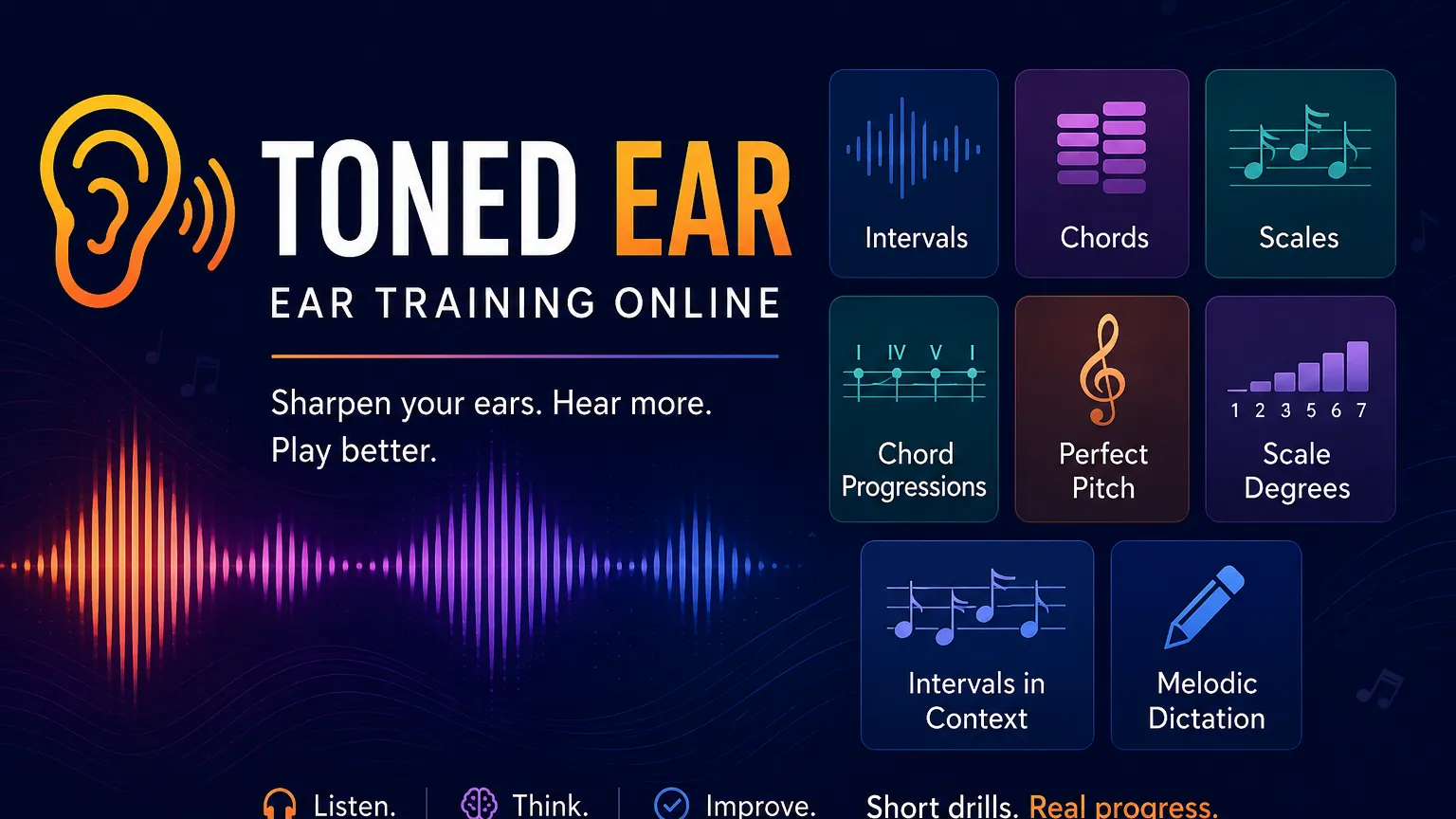
Toned Ear collects several ear training exercises in one place. The main activities include interval identification, chord identification, scale recognition, chord progression listening, perfect pitch note naming, functional scale degree practice, intervals in musical context, and melodic dictation.
Typical examples include:
- Interval drill: Plays: C4 -> E4. Answer: major third.
- Chord drill: Hear a chord. Choose whether it sounds major, minor, diminished, or another selected type.
- Scale degree drill: Hear a short progression, then identify the note's role in the key, such as 1, 3, 5, or 7.
- Melodic dictation: Hear a short melody and identify the scale degree path.
Because the site covers both isolated sounds and sounds inside a key, it is more than a simple pitch quiz. It can help connect raw listening with real musical context.
How To Use Toned Ear?
- Pick an exercise from the Toned Ear homepage, such as Intervals, Chords, Scales, Perfect Pitch, or Scale Degrees.
- Adjust the available options when the exercise allows it, such as which intervals, chords, notes, or scale degrees you want to practice.
- Start the quiz and listen carefully to the audio prompt.
- Select the answer that matches what you heard, then use the feedback to notice which sounds are easy or confusing.
- Repeat in short sessions so the sound becomes familiar instead of just memorized.
Best Ways to Explore Toned Ear
Start with intervals if you are new to ear training. They give you a clean foundation for hearing distance between notes.
Move to chord identification once intervals feel less random. Chords train your ear to hear stacked notes as colors and qualities, not just separate pitches.
Try scale degrees when you want a more musical challenge. Functional ear training teaches you to hear notes by their role inside a key, which is especially useful for singing melodies, transcribing music, and improvising.
Keep sessions short. Ten focused minutes is usually better than a long guessing marathon, especially when your ears start to blur similar sounds together.
Toned Ear FAQ
Is Toned Ear good for beginners? Yes. Beginners can start with simpler interval or chord settings and gradually add more options as the sounds become easier to recognize.
Does Toned Ear train perfect pitch or relative pitch? It includes a Perfect Pitch exercise for naming single notes, but many exercises focus on relative pitch, such as intervals, chords, scale degrees, and chord progressions.
What should I try after Toned Ear? Similar practice options include interval trainers, functional ear training apps, rhythm trainers, and music theory exercise sites. For a next step, try combining Toned Ear drills with singing the notes you hear.