pitchle
Loading game...
What is pitchle?
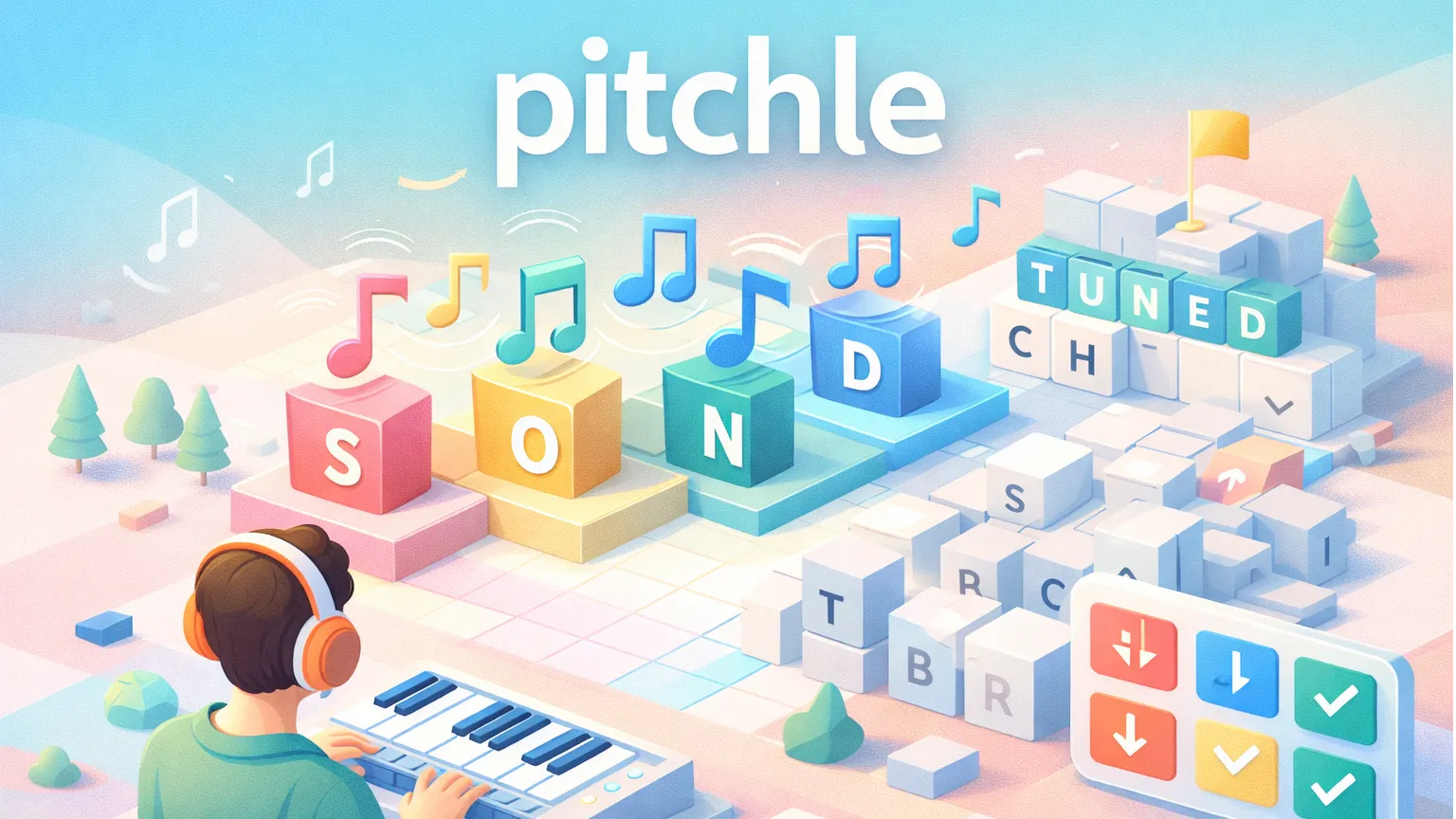
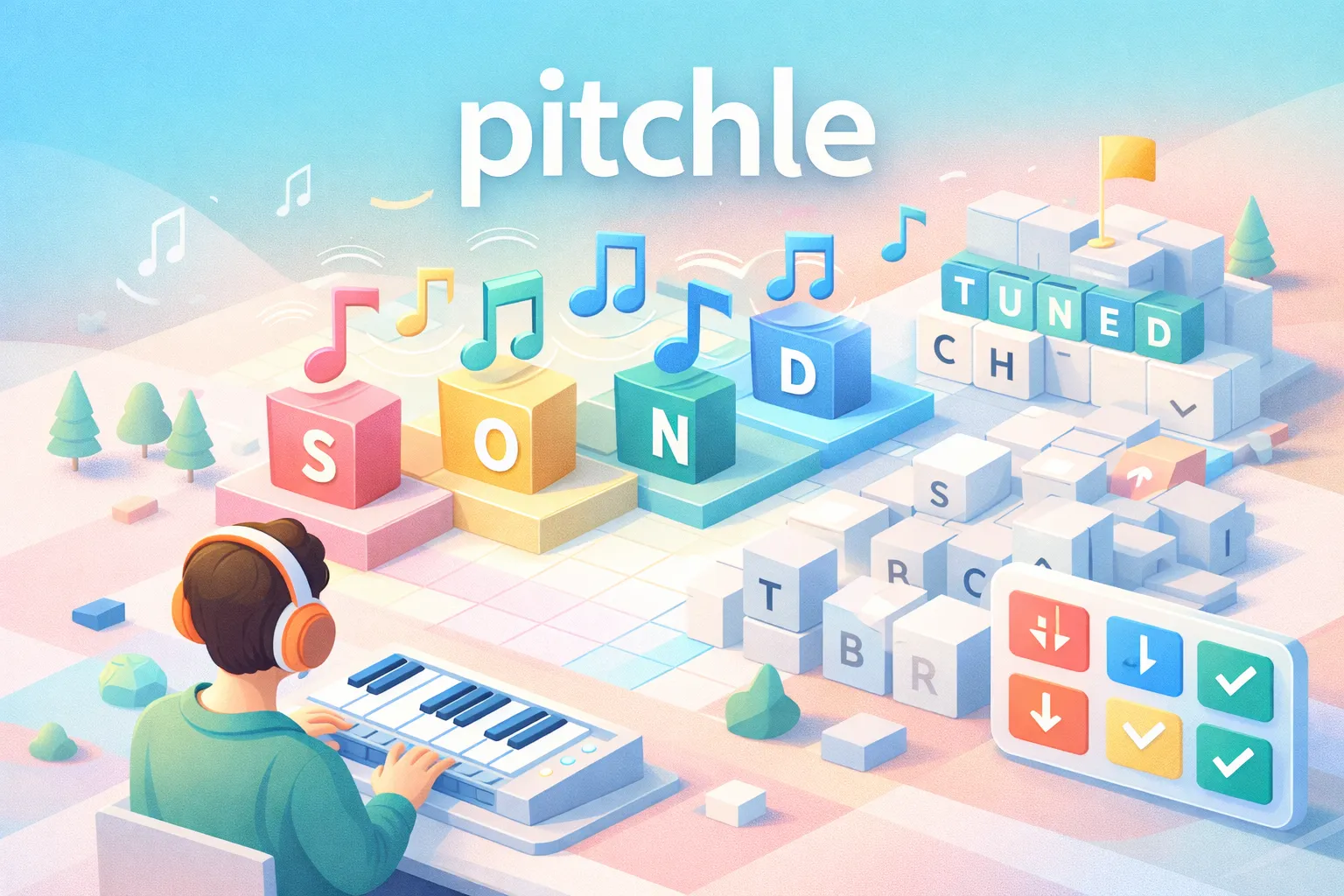
Imagine Wordle—but the letters don’t appear. They sing. In pitchle, every word is transformed into a sequence of musical tones, and your job is to reverse-engineer that melody back into a 5-letter word.
This is where things get dangerous. Your brain wants to treat it like a word game—but pitchle forces you into a completely different battlefield: pitch recognition. Each letter maps to a specific frequency, meaning every guess isn’t just logic—it’s listening, comparing, and decoding sound itself. :contentReference[oaicite:0]{index=0}
pitchle Game Rules (The Catch / The Trap)
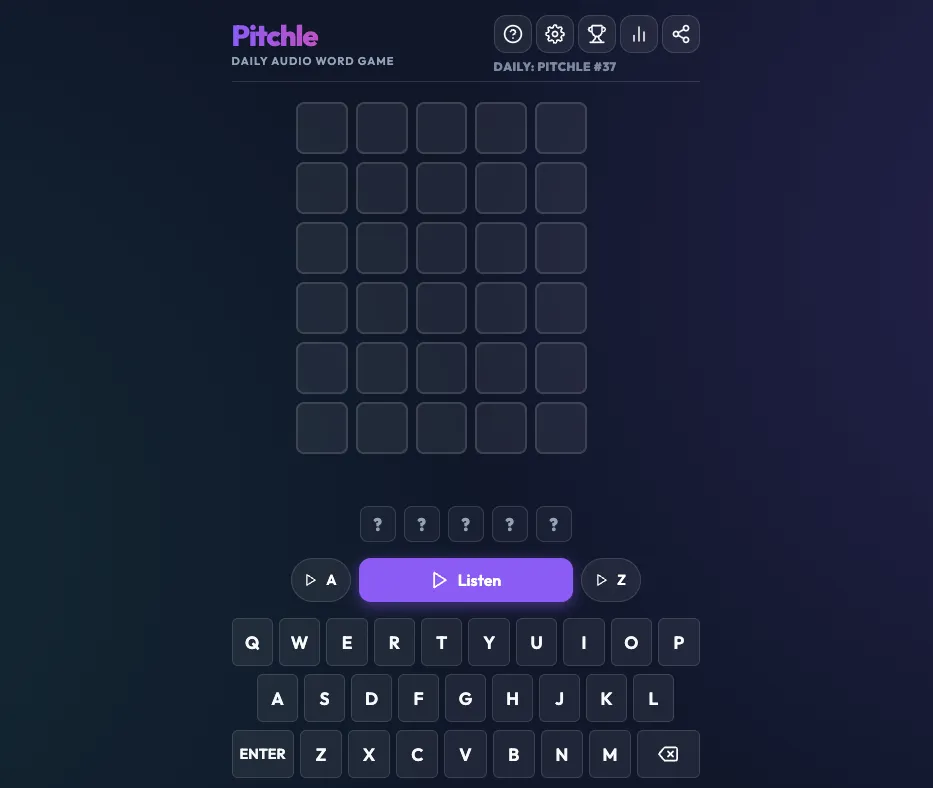
- 🎧 Melody = Word: Each hidden word is played as a sequence of tones (one note per letter).
- 🔤 5 Letters Only: You MUST guess a valid 5-letter English word.
- 🎹 Alphabet = Scale:
- A → low pitch (≈220Hz)
- Z → high pitch (≈932Hz)
- 📊 Feedback Loop (Wordle-style, but audio-first):
- Correct letter & position → locked in
- Correct letter, wrong position → reposition needed
- Wrong letter → eliminate from future guesses
- 🔁 Replay Anytime: You can re-listen to the melody as often as needed.
The trap? Letters that are far apart visually can sound similar (octaves), and your ear can trick you into hearing patterns that aren’t there.
How To Play pitchle?
Step 1: Listen to the Melody
Plays: 🎵 → 🎵 → 🎵 → 🎵 → 🎵
Each tone represents one letter of the hidden word.
Step 2: Make Your First Guess
Player Guesses: S O U N D
You’re guessing both the word and testing how those letters sound.
Step 3: Compare Sound vs Feedback
Result: Some letters correct, others misplaced
What This Means: Certain tones matched exactly, others were close but in the wrong spot.
Step 4: Refine Using Your Ear
Player Action: Adjust guess based on pitch direction (higher/lower feel).
Step 5: Solve the Melody
Result: 🎯 Correct word
You’ve decoded the sound into language.
Strategy & Tips
- 🎧 Anchor the Extremes: Use A (lowest) and Z (highest) to calibrate your ear.
- 🔁 Loop the Melody: Repetition reveals hidden pitch relationships.
- 🎹 Think in Intervals: Focus on how notes move (up/down), not absolute pitch.
- 🧠 Separate Sound from Spelling: Don’t guess words first—decode tones first.
- 📈 Play Daily: Your brain adapts quickly to pitch patterns with practice.
pitchle isn’t just a word game—it’s a translation challenge between sound and language. And once you start hearing letters… you can’t unhear them.