Absolute Pitch vs Relative Pitch: Best Beginner Mini-Games to Train Your Ear
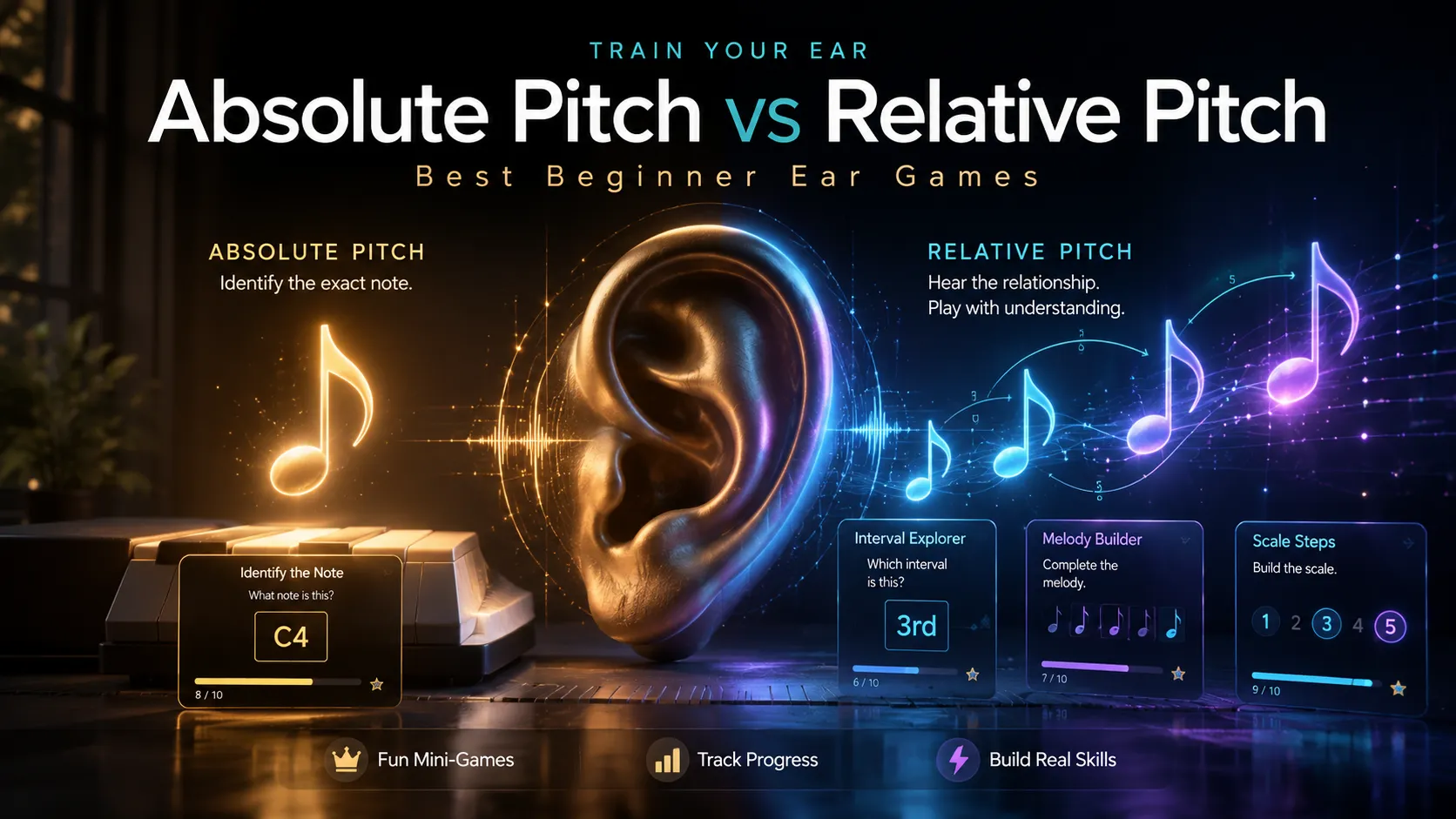
Absolute pitch (perfect pitch) means naming any isolated note instantly. Relative pitch means spotting intervals, scale degrees, and relationships between notes—way more useful for playing by ear, improvising, or sight-singing.
Train relative pitch first with key-context games (most beginners see results in weeks). Train absolute pitch with pure note-naming drills (slower gains, especially as an adult).
Best beginner mini-games: Functional Ear Trainer (relative pitch king), Tone - Learn Perfect Pitch (simple AP drills), and Perfect Ear (both in one app). All have free tiers, short sessions, and clear progression.
What Is It?
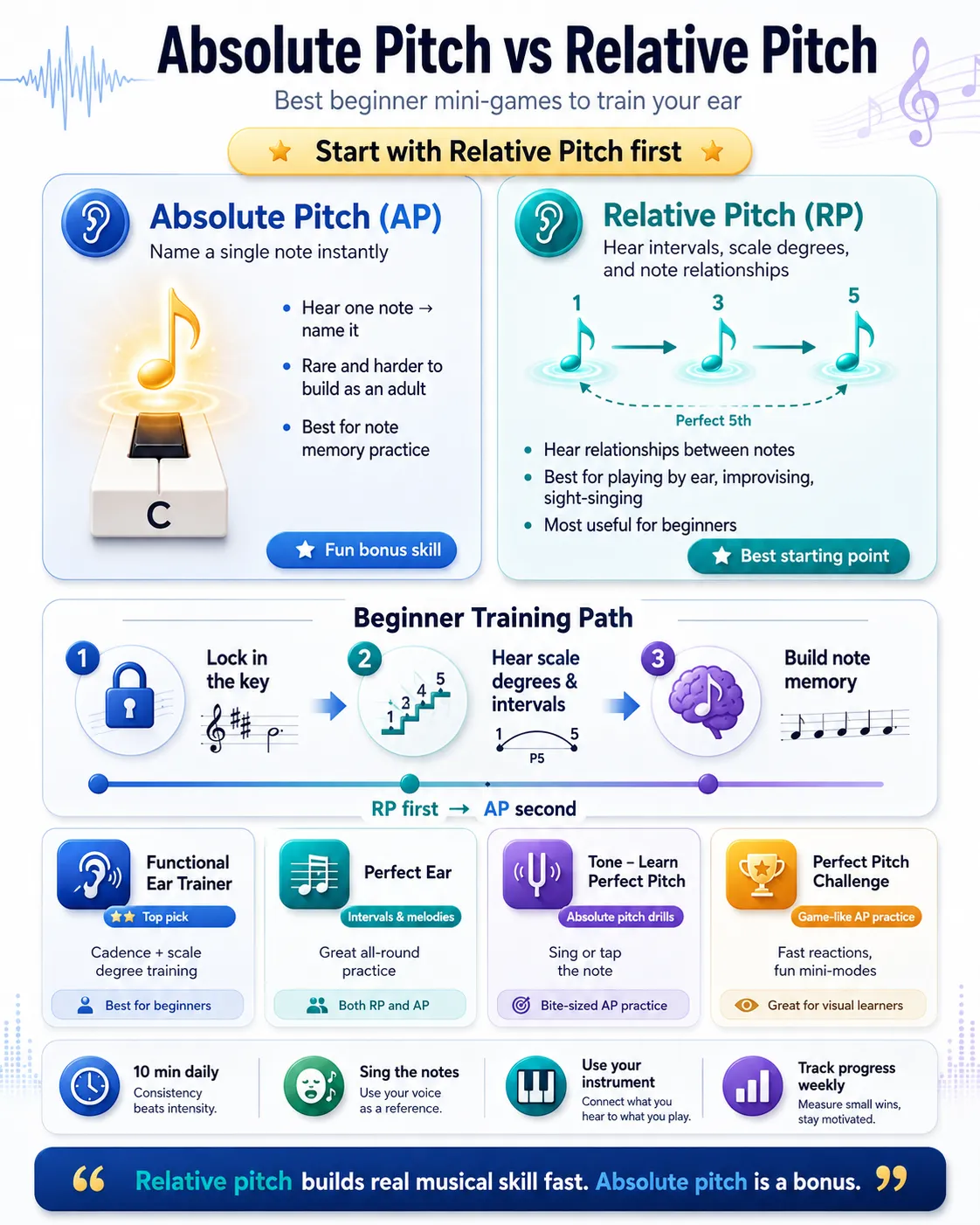
Absolute Pitch (AP): You hear a single note—like middle C—and instantly say “C” with no reference. It’s rare (1 in 10,000 people), often developed young, and feels like a superpower. Adults can improve note memory but full AP is tough.
Relative Pitch (RP): You hear two notes and know it’s a perfect fifth, or hear a melody and know it’s scale degree 3 then 5. Almost all pro musicians rely on this. It transfers directly to your instrument.
RP wins for 95% of players because it unlocks real music-making. AP is a fun bonus.
Relative Pitch: How To Play the Best Mini-Games
Functional Ear Trainer (Free on iOS/Android – Top Pick for Beginners)
Gameplay loop: The app plays a short cadence (I-IV-V-I) to lock in the key. Then it plays one random note from the scale. You name the scale degree (1–8) or sing it back using solfege or note names. Correct? Level up. Miss? It repeats the note with feedback.
Difficulty curve: Starts with just 3 notes in C major. Unlocks more scale degrees and keys only after you hit 80–90% accuracy. Sessions last 5–10 minutes.
Why it stands out: Unlike random interval quizzes, it trains functional hearing—the exact skill you use when jamming or transcribing songs. Feels like a real game with streaks and progress bars.
Who it’s for: Total beginners who want to play songs by ear fast. If you finish the first 10 levels, you’ll already hear basic melodies better.
Perfect Ear (Free with in-app purchases)
Gameplay loop: Pick “Intervals” or “Melodies.” Hear two notes (or a short phrase). Tap the correct interval name or replay the melody on a piano keyboard. Instant sound feedback and score tracking.
Difficulty curve: Beginner mode limits you to major/minor seconds and thirds. Advanced adds all intervals plus chords.
Why it stands out: Clean, no-frills design with singing mode so you actively produce the intervals. Tracks your weak spots automatically.
Who it’s for: Players who already know basic note names and want fast interval drills between instrument practice.
Absolute Pitch: How To Play the Best Mini-Games
Tone - Learn Perfect Pitch (Free on iOS with in-app purchases)
Gameplay loop: The app plays a single random note. You sing it back into the mic or tap the correct piano key/note name. It grades pitch accuracy in real time and shows your streak. Choose easy (C major white keys) or expert (all 12 notes across octaves).
Difficulty curve: Starts with 3–4 notes. Daily challenges add new pitches only after you nail the current set. 2–5 minute rounds.
Why it stands out: Voice mode forces active recall instead of passive guessing. Simple, addictive, and actually measures how close your sung pitch is.
Who it’s for: Beginners who want bite-sized daily AP practice. Great even if you’re 30+—you’ll build pitch memory faster than random YouTube drills.
Perfect Pitch Challenge (Free on Android)
Gameplay loop: Multiple mini-modes—Voice Challenge (sing to match), Tap & Hold (hold screen to match pitch), Road Colors/Numbers (drive a car where colors or numbers = specific notes). Hear note → react instantly.
Difficulty curve: Easy mode uses only 4 notes. Hard mode throws full chromatic scale at random octaves with time pressure.
Why it stands out: Turns boring note drills into actual mini-games with visuals and movement. Keeps short attention spans hooked.
Who it’s for: Visual or kinesthetic learners who get bored by plain quizzes. Fun enough to play every day.
Tips That Actually Work
- Daily 10-minute rule: Consistency beats long sessions. Do one game every morning.
- Sing everything: Don’t just tap answers—hum or sing the notes. Your voice locks pitch memory better than listening alone.
- Start with RP: Master Functional Ear Trainer first. Strong relative pitch makes absolute pitch drills 10× easier.
- Use your instrument: After each game, play the notes you missed on guitar/piano/voice. Connect ear to fingers.
- Track progress weekly: Record yourself naming 10 random notes. Compare week-to-week.
- Avoid reference notes: For true AP training, turn off any “starting C” helper after the first week.
Final Take
Relative pitch games like Functional Ear Trainer deliver quick, usable skills—most beginners notice they can figure out simple melodies by ear in 2–4 weeks. Absolute pitch mini-games like Tone build pitch memory over months, but don’t expect overnight miracles as an adult.
Pick one game, play it daily, and you’ll hear music differently forever. No fancy software or music degree required—just short, focused play. Start today and your ears will thank you.
Continue Reading
More guides, comparisons, and explainers related to the same games and topics.
Related Games
Browse games connected to the ideas, mechanics, or categories covered in this article.