What Is Toon Tone? Why This Cartoon Color Memory Game Feels So Clever
Key Takeaways
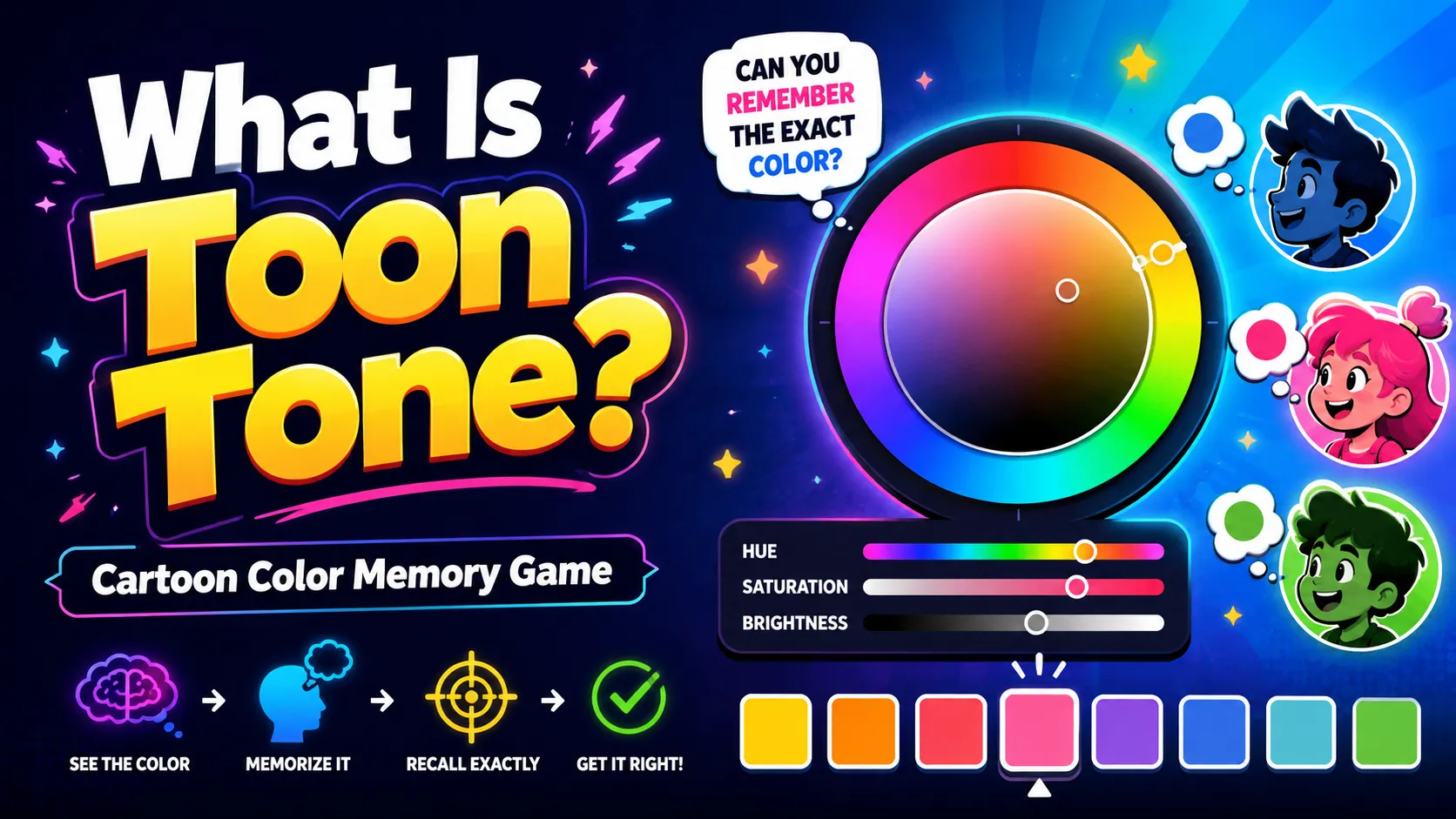
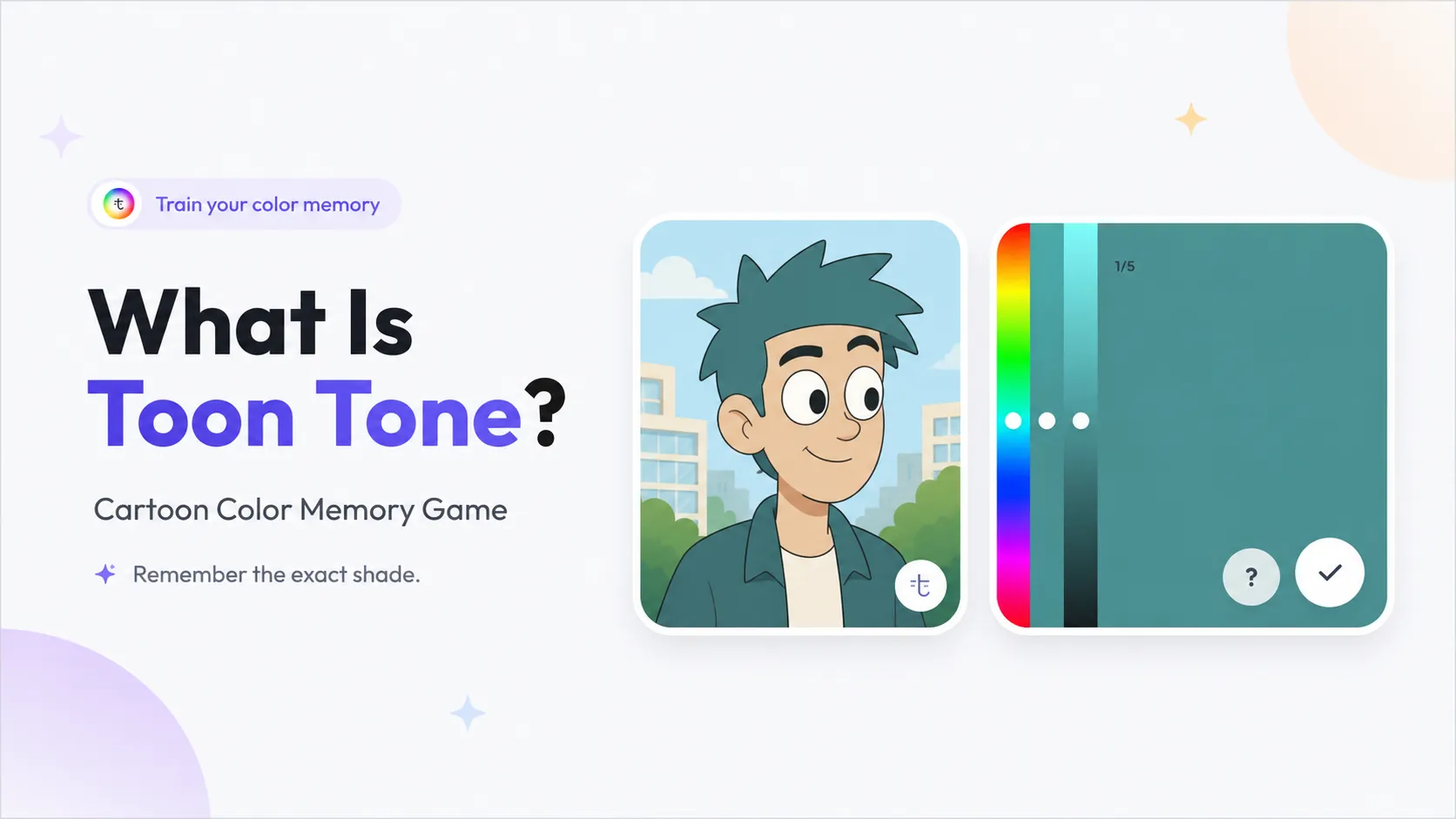
Toon Tone is a cartoon-themed color memory game where players try to recreate the exact colors of famous cartoon-style characters using Hue, Saturation, and Brightness controls. Instead of asking whether you recognize a character, it asks whether you can remember the precise shade that defines them.
The game works because it turns something familiar into a surprisingly technical challenge:
- You may remember a character as “blue,” “yellow,” or “green,” but the game asks for the exact version of that color.
- Each round becomes a test of visual memory, not just cartoon knowledge.
- The H/S/B sliders make every guess feel deliberate, measurable, and slightly risky.
- The reveal is satisfying because it shows exactly how your memory drifted from the original shade.
Toon Tone is best understood as a color perception puzzle wrapped in nostalgia. It is simple to start, but the scoring pressure makes small mistakes feel meaningful.
What Is Toon Tone Game?
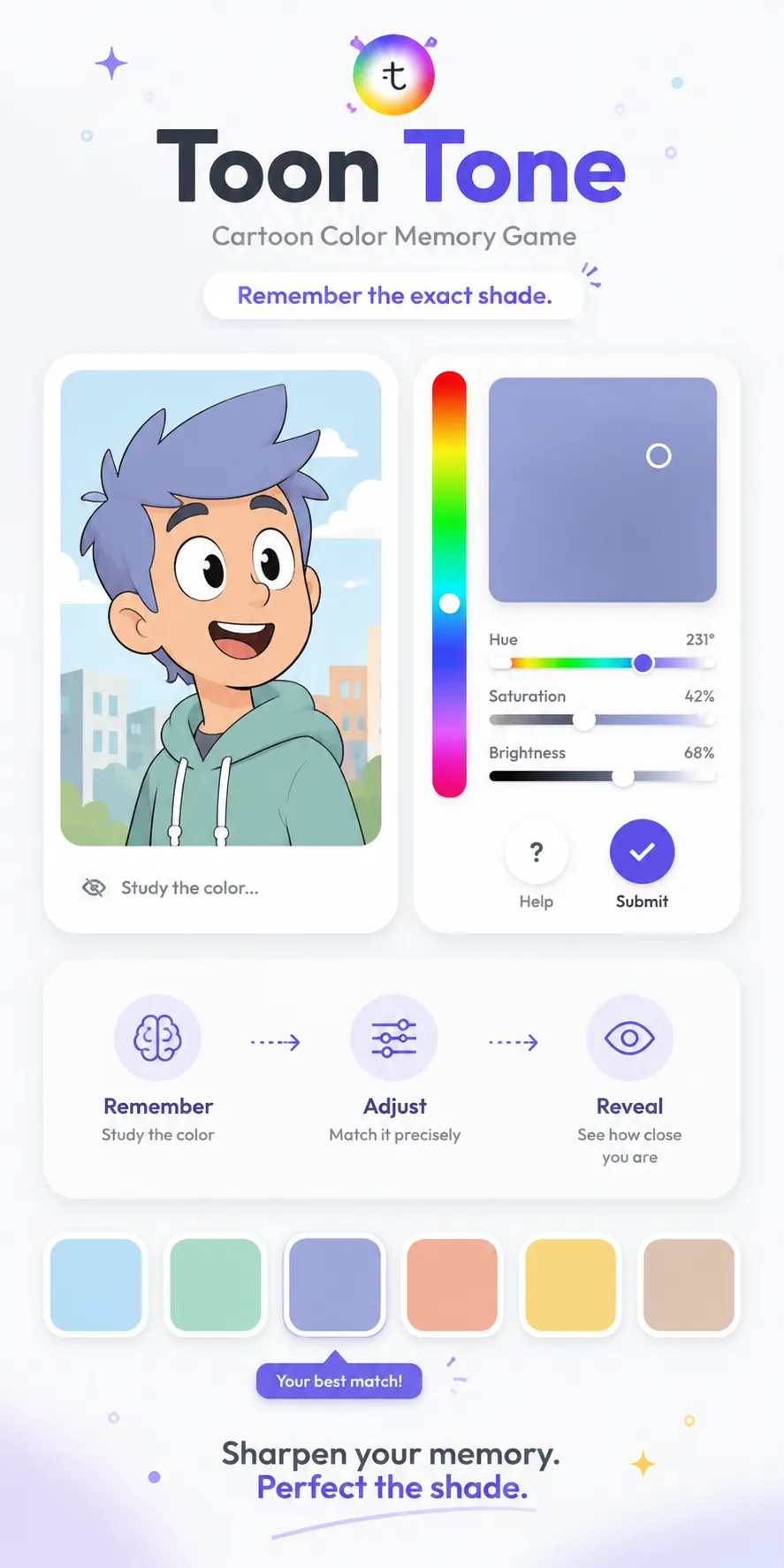
Toon Tone is a browser-based color guessing game built around cartoon character colors. The game presents character-based prompts, then asks players to recreate the target color as accurately as possible using color controls.
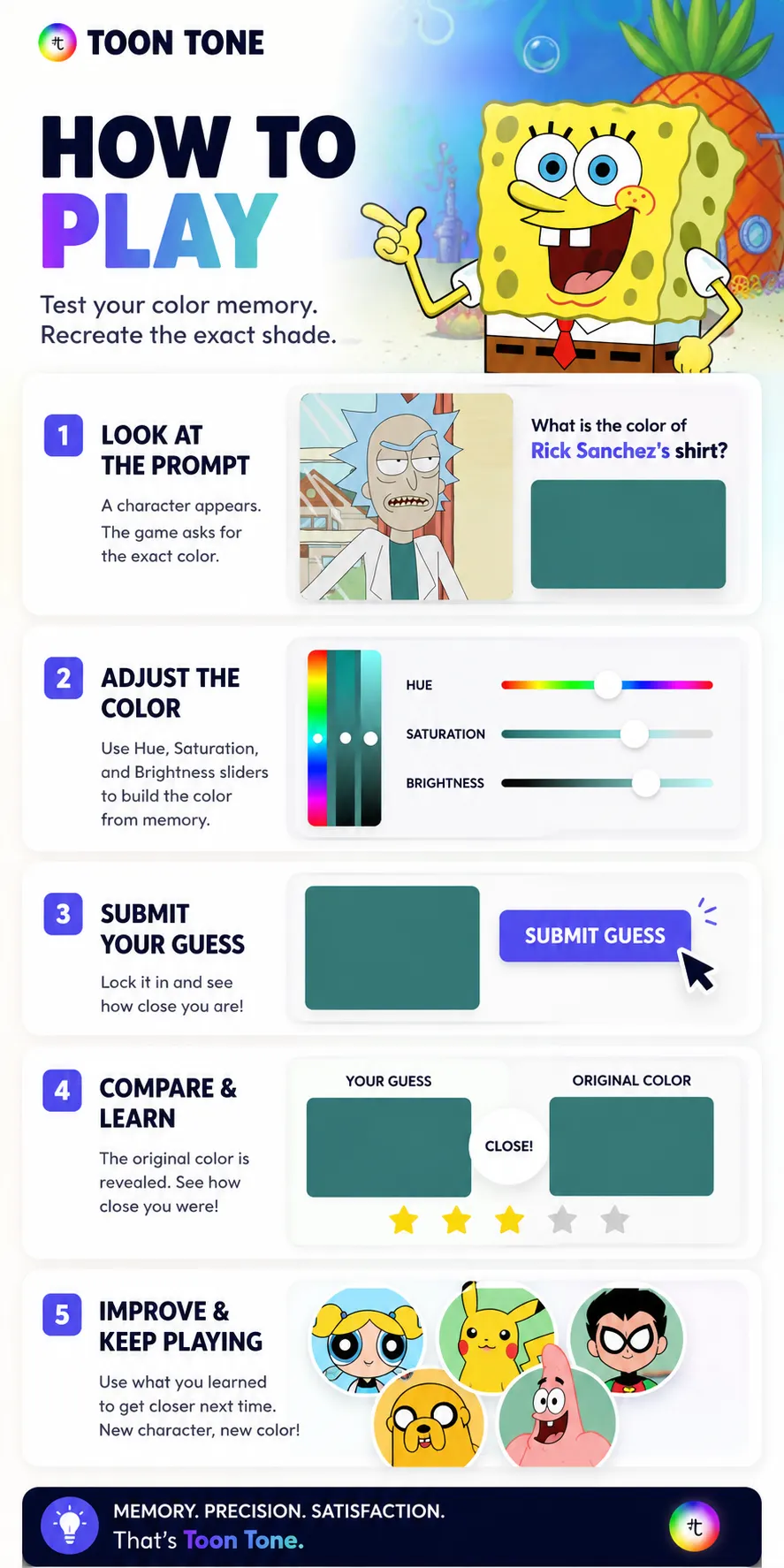
The core loop is direct:
- Look at the prompt for a character color or character detail.
- Use H/S/B sliders to build the color from memory.
- Submit your guess.
- Compare your color against the original.
- Use the result to improve your next guess.
That makes Toon Tone different from many daily guessing games. It is not about spelling, trivia recall, or narrowing down an answer through clues. It is about translating a memory into a measurable color value.
The clever part is that players usually feel confident at first. Cartoon colors seem obvious because they are bold and iconic. But once the sliders appear, “blue” is no longer enough. Is it bright cyan, deep royal blue, muted sky blue, or a slightly purple blue? That uncertainty is where the game becomes interesting.
What Makes It Different?
Toon Tone stands out because it takes the familiar structure of a guessing game and replaces the usual answer box with a color construction challenge.
Most Wordle-style or trivia-based games ask players to identify something:
- Name the word.
- Guess the country.
- Recognize the movie.
- Identify the song.
- Pick the character.
Toon Tone asks a more unusual question: can you reproduce what you think you remember?
That shift changes the entire feel of the game. Recognition is only the starting point. The real skill is calibration.
A player might know the character instantly, but still miss the shade because:
- The hue is slightly too warm or too cool.
- The saturation is too intense.
- The brightness is lower than the original.
- Memory exaggerates the color into something more vivid than it actually is.
- The character’s color changes slightly across art styles, lighting, or scenes.
This makes Toon Tone feel closer to games like Colordle, Color Guesser, or other visual precision puzzles than standard character trivia. The fun comes from watching your brain argue with the slider.
Why It Feels Challenging
Toon Tone feels challenging because color memory is less reliable than players expect.
Most people remember colors as labels, not exact values. A character becomes “the orange one,” “the blue one,” or “the green one.” That is useful for recognition, but not enough for accurate reconstruction.
The game exposes three common memory traps.
First, players overtrust hue.
Hue is the color family: red, yellow, green, blue, purple, and so on. Many players focus almost entirely on getting the hue right. But a correct hue with the wrong brightness can still feel noticeably off.
For example, a player might choose the right blue family but make it too dark. The result may technically be close, yet visually it does not feel like the character anymore.
Second, players often oversaturate cartoon colors.
Because cartoons are associated with bold visuals, players may assume every color is extremely vivid. In reality, many iconic character colors are softer, flatter, or more balanced than memory suggests.
That is why the saturation slider matters. Too much saturation can make a familiar character color look artificial, even when the hue is close.
Third, brightness is easy to underestimate.
Brightness often decides whether a guess feels alive or muddy. A color that is only slightly too dark can make the entire answer feel wrong.
This is why Toon Tone has a satisfying learning curve. Each failed guess teaches a specific lesson: not just “wrong,” but how it was wrong.
The Puzzle Design Behind Toon Tone
Toon Tone works because it combines three strong design ingredients: nostalgia, precision, and instant feedback.
Nostalgia gives the game emotional pull. Players are not matching random colors. They are recalling characters and visual memories they may already care about.
Precision gives the game depth. The H/S/B system turns a casual memory into a fine-tuned puzzle. Instead of typing one answer, players must shape the answer.
Instant feedback gives the game replay value. After each guess, the original color appears and players can compare it with their selection. That moment is the hook. It creates the feeling of, “I was close, but I can do better.”
This is a powerful loop because it makes improvement visible. Even a miss can feel useful if the player understands why it happened.
How Toon Tone Compares to Other Guessing Games
Toon Tone belongs to the broader family of browser guessing games, but it plays differently from most daily puzzle formats.
Compared with Wordle-style games, Toon Tone is less about deduction and more about perception. There are no letter positions or vocabulary clues. The puzzle is inside your memory.
Compared with character trivia games, Toon Tone is more demanding. Knowing the character may help, but it does not guarantee a strong score. The game rewards visual accuracy, not just recognition.
Compared with color guessing games, Toon Tone has a stronger pop-culture hook. Random color targets can feel abstract, but cartoon-based prompts give each round a clear theme and emotional anchor.
That combination makes Toon Tone feel accessible but not shallow. Anyone can understand the goal quickly, but getting good requires repeated attention to hue, saturation, and brightness.
Player Behavior: Why People Keep Adjusting
A big part of Toon Tone’s appeal is the final-second slider doubt.
Players often start with a confident memory, then hesitate:
- “Was that blue more cyan?”
- “Is the yellow actually darker?”
- “Did I make the red too intense?”
- “Would the original look flatter than this?”
That hesitation is good puzzle design. It means the game has moved from passive recognition to active judgment.
The best players usually develop habits over time:
- They picture the character before touching the sliders.
- They choose hue first, then refine saturation and brightness.
- They avoid pushing colors to extremes unless the character clearly demands it.
- They study the reveal after each guess instead of rushing to the next round.
- They build mental reference points, such as sky blue, banana yellow, tomato red, or soft peach.
This makes Toon Tone surprisingly skill-based. The more you play, the more you notice how your memory tends to distort colors.
Tips for Playing Better
Start with the character image in your mind.
Do not immediately drag sliders at random. First, picture the character as clearly as possible. The stronger the mental image, the better your first color direction will be.
Lock in hue before fine-tuning.
Decide the main color family first. Once the hue feels right, adjust saturation and brightness. Jumping between all three sliders too quickly can make the color feel unstable.
Treat brightness as a major scoring factor.
If your guesses often look dull or heavy, raise the brightness. Many cartoon colors are lighter than players remember.
Do not assume every cartoon color is neon.
A common mistake is making everything too saturated. Some character colors are iconic because they are simple, not because they are maximum-intensity.
Use the reveal as feedback, not failure.
The comparison screen is the most valuable part of the game. If your hue was close but brightness was off, remember that pattern for future rounds.
Think in reference colors.
Instead of thinking only “blue,” think “sky blue,” “teal blue,” “deep navy,” or “soft cyan.” These mental anchors make slider choices easier.
Who Will Enjoy It?
Toon Tone is a strong fit for players who enjoy visual puzzles, cartoon nostalgia, and compact browser challenges.
It is especially good for:
- Players who like color-based games and visual accuracy tests.
- Cartoon fans who enjoy recognizing character details.
- Puzzle players who want something different from word games.
- Design-minded players who already think about hue, saturation, and brightness.
- Daily challenge fans who enjoy quick rounds with measurable improvement.
It may be less appealing to players who want fast action, deep story, or traditional trivia questions. Toon Tone is quiet, focused, and precise. Its satisfaction comes from small adjustments rather than big dramatic moments.
Final Thoughts
Toon Tone is a smart twist on the browser guessing game formula. It takes the familiar comfort of cartoon characters and turns it into a precise color memory challenge.
What makes the game work is the gap between confidence and accuracy. Players often believe they know a character’s color perfectly, but the H/S/B sliders reveal how fuzzy that memory really is. That moment of correction is the core pleasure of the game.
For players tired of standard word puzzles or simple trivia clones, Toon Tone offers a fresh kind of challenge: one based on perception, memory, and visual judgment.
It is easy to understand in seconds, but hard to master because the target is not just the character. The target is the exact shade your brain only thought it remembered.
Continue Reading
More guides, comparisons, and explainers related to the same games and topics.
Related Games
Browse games connected to the ideas, mechanics, or categories covered in this article.