How to Train Your Ear: A Practical Guide for Music Game Players
Quick Answer
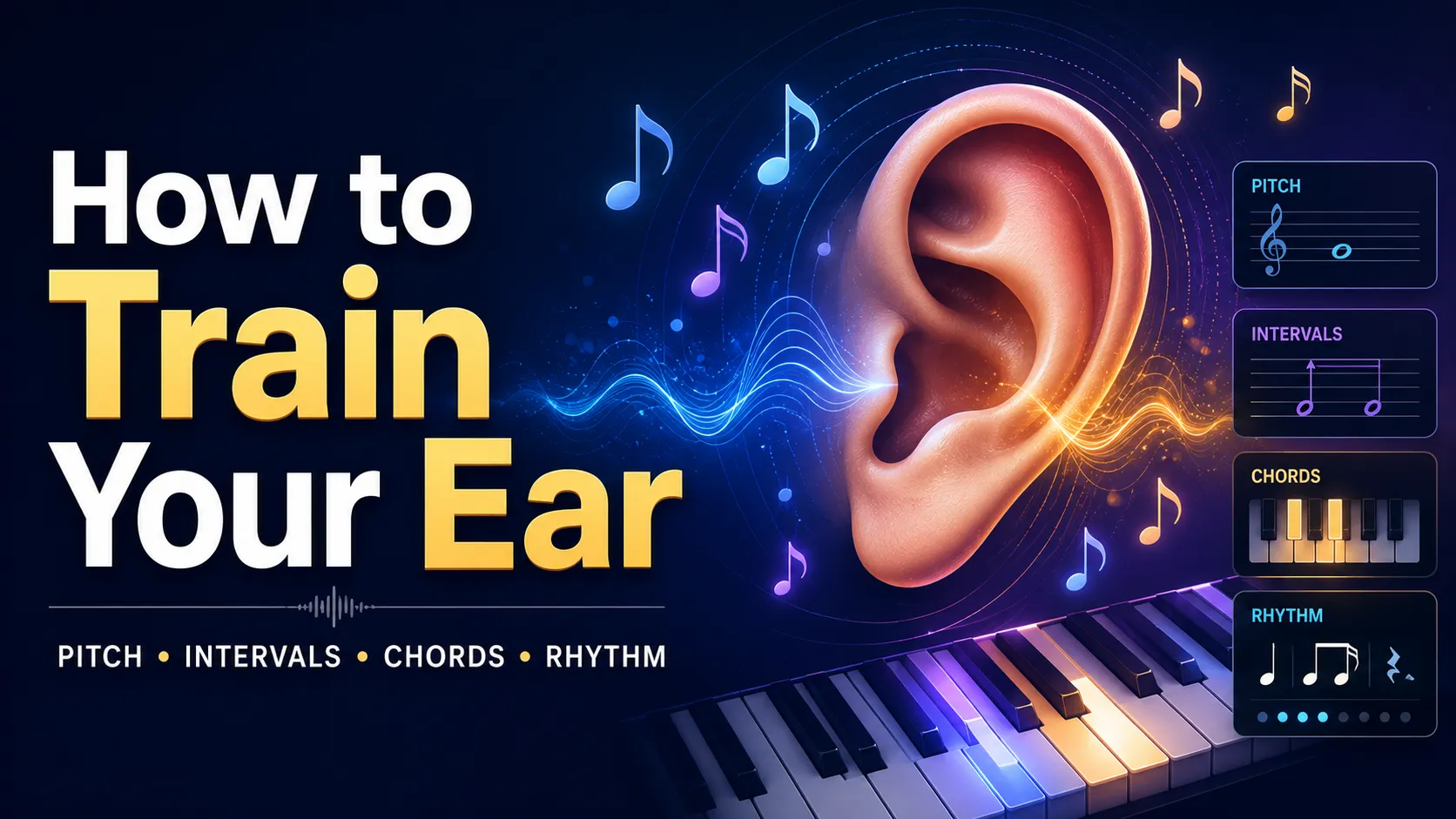
Training your ear means learning to recognize musical sounds by listening: pitch, intervals, chords, scales, rhythm, and melody. The fastest way to improve is to play short ear-training games every day, answer quickly, check mistakes, and repeat the sounds until patterns feel familiar.
For beginners, start with higher or lower pitch, major vs minor, and simple interval guessing. Advanced players can move into chord progressions, scale degrees, rhythm dictation, and melody playback.
What Is It?
Ear training is a listening skill game for musicians, producers, singers, and curious players. Instead of reading notes first, you train your brain to identify what you hear.
Most ear-training games ask you to listen to a sound, then choose an answer:
- Which note is higher?
- Is the chord major or minor?
- What interval did you hear?
- Which scale degree was played?
- Can you repeat the rhythm or melody?
The core loop is simple: listen → guess → get feedback → replay → improve.
What makes ear training satisfying is that progress feels real. At first, every sound may seem random. After a few sessions, you start noticing patterns: the brightness of a major chord, the darker color of minor, the “home” feeling of the tonic, or the jump of an octave.
How To Play
A good ear-training session should be short, focused, and repeatable.
- Pick one skill at a time. Do not train pitch, chords, rhythm, and scales all in one session.
- Listen once before guessing. Avoid spamming replay immediately.
- Choose your answer quickly. Trust your first impression, then learn from the result.
- Replay mistakes. The wrong answers teach you more than the easy wins.
- Raise difficulty slowly. Add more notes, intervals, or chord types only when you are consistent.
A beginner-friendly order looks like this:
- Pitch direction — decide whether the second note is higher or lower.
- Major vs minor chords — learn the emotional color of each sound.
- Simple intervals — start with unison, octave, perfect fifth, and minor/major third.
- Scale degrees — hear how notes relate to the key center.
- Rhythm patterns — clap or tap what you hear.
- Melody memory — listen to short phrases and repeat them back.
The goal is not to get every question right immediately. The goal is to make your ears faster and more reliable over time.
Tips
- Practice daily, but keep it short. Ten focused minutes is better than one long unfocused session.
- Sing the answer when possible. Singing connects your ear, voice, and memory.
- Use reference songs carefully. A familiar melody can help identify intervals, but do not rely on it forever.
- Start with contrast. Major vs minor is easier than identifying seven chord types at once.
- Repeat hard sounds. If you keep missing minor sixths or dominant sevenths, isolate them.
- Train in context. Scale degrees and chord progressions are often more useful than random note guessing.
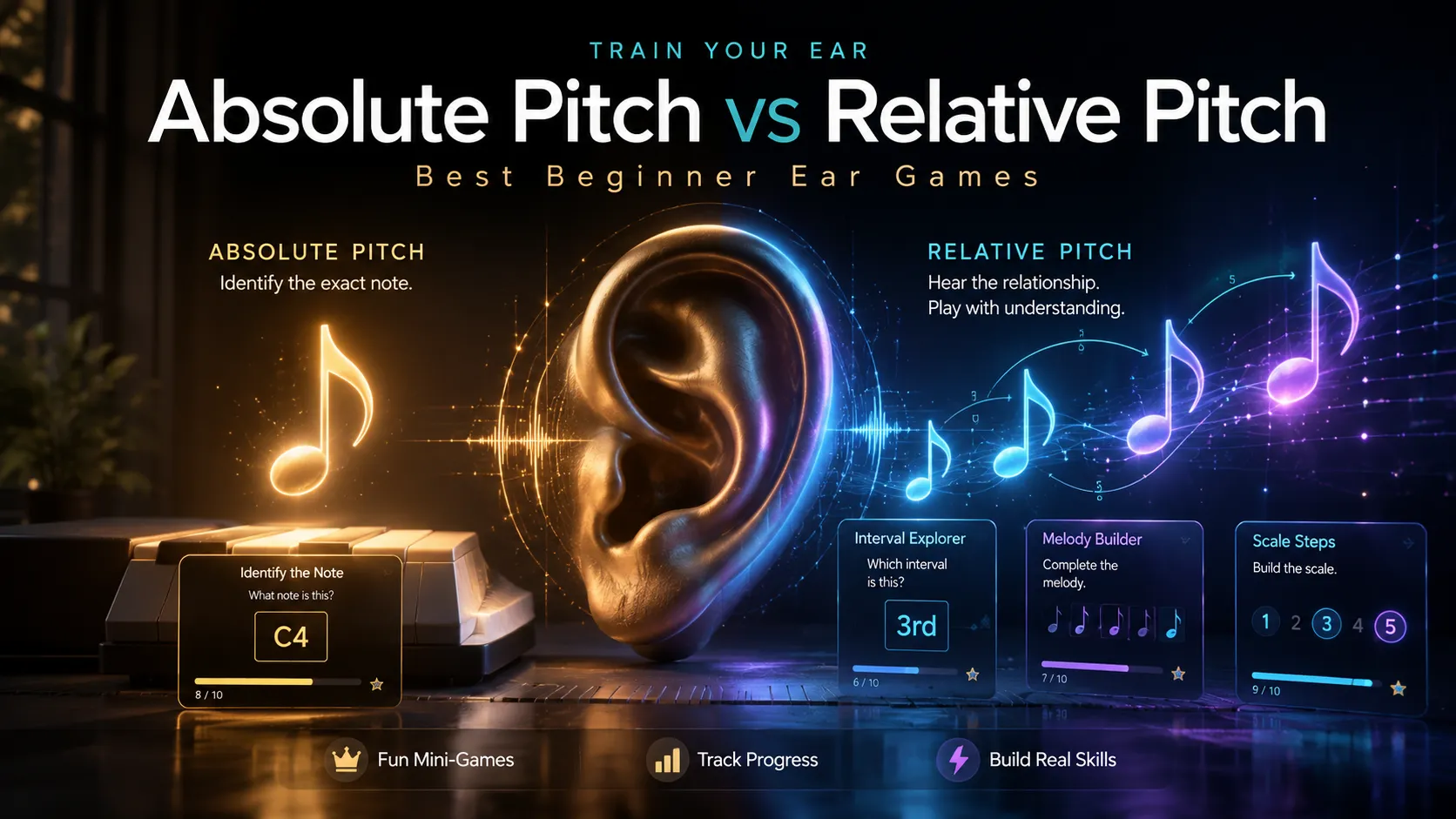
- Do not chase perfect pitch first. Relative pitch is more practical for most players and musicians.
- Use headphones or quiet speakers. Poor audio makes subtle differences harder to hear.
- Track accuracy, not streaks only. A streak feels good, but long-term accuracy shows real improvement.
Common Difficulty Levels
Beginner:
- Higher or lower pitch
- Same or different note
- Major vs minor
- Simple rhythm copying
Intermediate:
- Interval recognition
- Chord type identification
- Scale degree guessing
- Short melody playback
Advanced:
- Chord progressions
- Seventh chords and extensions
- Rhythmic dictation
- Transcription-style melody challenges
Why It Stands Out
Ear-training games work because they turn music practice into fast feedback. You do not need a full lesson, sheet music, or a long setup. You can open a trainer, play a few rounds, and immediately see where your listening is strong or weak.
They are especially useful because they train skills that normal instrument practice can miss:
- Recognizing sounds without looking
- Hearing relationships between notes
- Improving musical memory
- Understanding harmony by ear
- Reacting faster while playing or singing
The best ear-training games are not flashy. They are clear, repeatable, and honest about your mistakes.
Who Is It For?
Ear training is worth trying if you are:
- A beginner musician who wants better musical instincts
- A singer who wants stronger pitch accuracy
- A guitarist, pianist, or producer learning chords by ear
- A player who enjoys quick daily music challenges
- A songwriter trying to hear melodies before playing them
- A music student preparing for theory or musicianship tests
It may feel slow at first, but the skill compounds. Once your ear improves, learning songs, improvising, tuning, singing, and writing music all become easier.
Final Take
Training your ear is one of the most useful music skills you can build, and browser-based ear-training games make it easy to start. Begin with simple listening challenges, practice a few minutes daily, and focus on one sound category at a time.
The best strategy is simple: listen carefully, guess honestly, replay mistakes, and repeat daily. You do not need perfect pitch to get better. You need consistent practice and clear feedback.
Continue Reading
More guides, comparisons, and explainers related to the same games and topics.
Related Games
Browse games connected to the ideas, mechanics, or categories covered in this article.